
Agricultural machinery: how to choose castings for demanding working environments
For purchasing managers and engineering managers at agricultural machinery manufacturers, choosing a foundry supplier is a strategic decision. It affects reliability in the field, warranty costs and the brand’s long-term reputation.
For purchasing managers and engineering managers at agricultural machinery manufacturers, choosing a foundry supplier is a strategic decision. It affects reliability in the field, warranty costs and the brand’s long-term reputation.
1. Why the quality of castings matters in agricultural machinery
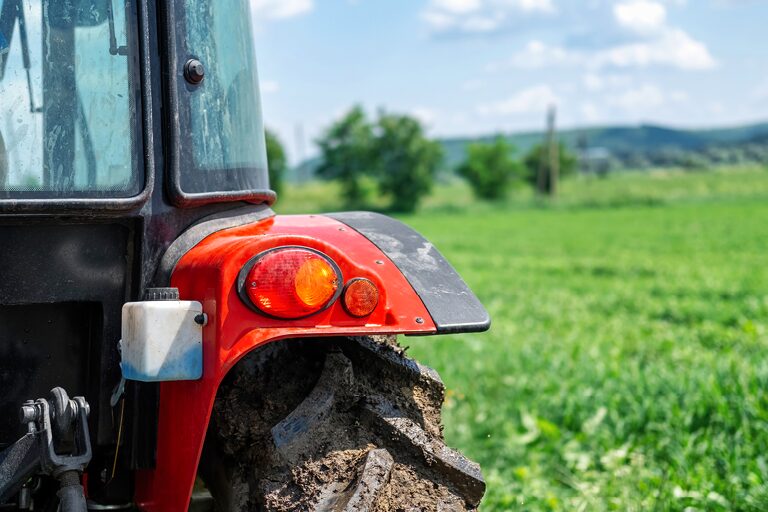
Agricultural machinery operates in some of the harshest environments in the industry. Typical stress factors include:
- Abrasive contact with the ground, stones and crop residues.
- Exposure to moisture, fertilisers and agrochemicals.
- Repeated impacts from obstacles in the field.
- High levels of vibration and dynamic loads whilst working.
- Wide temperature ranges and long operating hours.
For cast components such as:
- Gearbox and transmission housings
- Mountings and anchor points
- Chassis structures and components
- Housings for hydraulic and transmission systems
These conditions mean that:
- Surface wear and abrasion-induced degradation.
- Fatigue caused by cyclic loads and vibrations.
- Risk of cracks or premature failure in critical areas.
For a purchasing manager or an engineering manager, this means that material selection, design support and the foundry’s capacity are just as important as the commercial terms.
2. Choice of material: grey cast iron vs nodular cast iron
Most castings used in agricultural machinery are made from grey cast iron or nodular (ductile) cast iron. The choice depends on the component’s function and the loads it must withstand.
2.1 Grey cast iron
Grey cast iron is often used for:
- Components where stiffness and damping are important.
- Parts subjected to compressive loads with low impact.
- Applications where cost-effectiveness is a priority.
Typical uses in agricultural machinery:
- Housing components where vibration damping is important.
- Non-critical structural components.
- Parts where dimensional stability is the primary requirement.
Advantages:
- Good machinability.
- Good shock-absorbing properties.
- Competitive cost.
Limitations:
- Lower tensile strength and elongation.
- Lower impact and fatigue strength compared with ductile iron.
2.2 Nodular (ductile) cast iron
Nodular cast iron is often preferred for:
- Structural and load-bearing components.
- Parts subjected to dynamic loads and impacts.
- Applications where safety and reliability are critical.
Typical uses in agricultural machinery:
- Transmission housings and gearboxes.
- Heavy-duty mountings.
- Components for drivetrains and chassis.
Advantages:
- Higher tensile strength and elongation than grey cast iron.
- Better impact and fatigue resistance.
- A good combination of strength, toughness and machinability.
Limitations:
- Generally more expensive than grey cast iron.
- It requires more tightly controlled production and quality processes. Rule of thumb: If the component is critical to the safety or uptime of the machine, or if it is subject to significant impact and fatigue, ductile iron is usually the best choice for agricultural machinery castings.
3. Design criteria affecting durability and cost
The material is only part of the equation. The design of the casting has a major influence on performance, weight and total cost of ownership.
Key design aspects to consider:
3.1 Stress distribution and fatigue life
- Avoid sharp corners and abrupt changes in cross-section.
- Use radios and smooth transitions to reduce stress concentrations.
- Align ribs and reinforcements with the main load-bearing lines.
3.2 Weight and stiffness
- Optimise wall thicknesses to balance weight and stiffness.
- Use ribs strategically rather than increasing the overall thickness.
- Consider topological optimisation for critical components.
3.3 Manufacturability
- Design for casting: avoid undercuts, excessively thin sections and complex cores where they are not necessary.
- Ensure that machining operations are simple and repeatable.
- Work with the foundry from the earliest stages of design to avoid late-stage changes.
3.4 Assembly and maintenance
- Consider how the component will be assembled and disassembled in the field.
- Ensure that the mounting points and interfaces are robust and accessible.
- Design the component to facilitate the replacement of wear parts where appropriate.
A foundry with in-house engineering capabilities can help review these aspects and propose design changes that improve durability without significantly increasing costs.
4. Procurement criteria: how to evaluate a foundry supplier
From a procurement and category management perspective, the following criteria help to reduce risk and improve the total cost of ownership for cast agricultural machinery:
4.1 Technical capability
- Ability to work with both grey cast iron and ductile cast iron.
- Experience with similar components (gearboxes, brackets, structural parts).
- Ability to support design reviews and material selection.
What to ask:
- Can you provide examples of similar components for demanding applications?
- How do you support customers in optimising materials and design?
4.2 Quality system and documentation
- Certified quality management (e.g. ISO 9001).
- Clear inspection plans and control records.
- Ability to provide documentation for audits and customer approvals.
What to ask:
- What is your defect rate and how is it tracked?
- Can you provide sample inspection reports and traceability documentation?
4.3 Production stability and scalability
- Proven capability in medium and large production runs.
- Proven capability in medium and long runs.
- Stable processes with controlled variation.
What to ask:
- Ability to scale up in line with demand without compromising quality.
- What is your typical lead time for mass production?
4.4 Total Cost of Ownership (TCO)
- Assessment not only of the unit price, but also of warranty costs, replacement frequency and internal load.
- Preference is given to suppliers who reduce risk and improve reliability, even if the initial price is slightly higher.
What to ask:
- How do you help customers reduce breakdowns in the field?
- Can you share examples where improved casting has reduced the total cost for the OEM?
5. FUNOSA’s role for agricultural OEMs
Funosa supports procurement managers and engineering teams at agricultural machinery manufacturers by:
- Engineering expertise in reviewing and optimising casting designs.
- Experience with grey and nodular cast iron for demanding industrial sectors.
- A quality management system compliant with ISO 9001 and ISO 14001 requirements.
- Focus on medium and large production runs, with consistent quality and traceability.
Funosa positions itself as a flexible and technically sound foundry partner in Europe, capable of supporting projects where reliability and documentation are just as important as the component itself.